January 30, 2011

This past Thursday night I was welcomed by a little creature of the night. A bat. In my bedroom.
Yes my first reaction was to scream, run out of my room and shut the door on it, but after getting help to set it free again and with a couple days of clarity and reflection I have come to realise something.
Why was it that I was so frightened by a bat entering my room? Would I have been just as startled if I was camping, sitting around a fire at night and noticing a bat flying above in the trees? No, I probably wouldn't have. The reason why, is because my bedroom is my environment and when you go camping, you have entered 'wilderness'- it is nature's territory whereas my bedroom is my, human, man-made territory. Now, without getting into an entirely different discussion about whether or not camping-sites, and wilderness in general, is man-made, let me continue. 

http://farm5.static.flickr.com/4068/4336696399_599414418e.jpg

Humans have made their cities so controled and sectioned off from 'wilderness' that we forget that we are living in a world full of wilderness. From ladybugs and ants to squirrels, birds and yes, even bats. We forget that while we have invaded what once used to be uninhabited land (many, many years ago), we also forget that nature still exists all around us. We forget so much that when it pops up on your curtain rod and stares you in the face you get scared and run away.
This is not good. We need to learn to co-exist with these creatures. We all share the same environment and while we each may invade the other's space, humans on average do a lot more harm to nature than nature to humans. And so, we need to respect nature and forgive it for getting occasionally lost and entering our bedrooms. Yes there are sanitary reason to get the bat back outside, but there are humane ways and understanding ways. And so, the next time there is a bat in your room, remember it is part of nature and not just an intruder in your space.

#2 January 22, 2011

Please watch this video, it's important you know what is happening to the fish in our oceans


Here is an excellent blog post regarding this issue: http://kreativlondon.blogspot.com/p/earth-kreativ.html

Do not ignore this issue


January 22, 2011

We all know sites like Craigslist and Kijiji exist, so it was about time someone made a site like that with an environmental twist. And that site is The Freecycle Network.
The basic premise is people exchanging things they no longer need between each other rather than just throwing the item out.

"By giving freely with no strings attached, members of The Freecycle Network help instill a sense of generosity of spirit as they strengthen local community ties and promote environmental sustainability and reuse. People from all walks of life have joined together to turn trash into treasure"

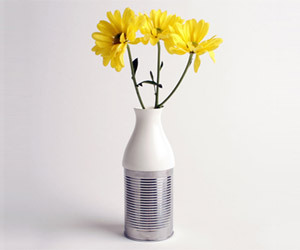
One such example of what you can do, making something out of nothing
http://s3.amazonaws.com/materialicious2/images/tin-can-lids-turn-trash-into-treasure-m.jpg?1248821708

Thanks to people's generosity and willingness to participate, the site claims to keep 500 tons of garbage a day out of landfills. That's pretty incredible.

I have yet to try it out, but keep your eye on it, maybe you'll find that kitchen faucet or desk drawer you've always been looking for! And even if you never go on this site in your life, the basic principle that lies behind it can be adopted - instead of throwing out that old pair of jeans, donate it to Salvation Army, or give it to a friend : )

January 20, 2011

Happy New Year Everyone!

I appologize for the haitus. Exams were long, too long, and I have finally managed to somewhat settle into my new semester after a wonderful break.

And what's better for a new-year themed post than a little look at how 2010 did environmentally. An article on the BBC news website today reveals that 2010 was the warmest year on record... hmm....

It also says that "Other indications of 2010 warmth flagged up by the WMO include the lowest extent of sea-ice cover in the Arctic since the satellite record began"

What's more, the article lists a couple extreme weather events in 2010:
"Agencies including the UK Met Office suggest 2011 is likely to be cooler on average than 2010, as La Nina conditions dominate."

Now with this in mind (and I encourage you to read the article quickly to be properly informed), I suggest that all of you add at least one New Year's resolution to your list that involves bettering your behaviour toward the environment, be it reading to become more informed, composting, or offsetting your carbon footprint by planting trees.

My resolution will be to update this blog as much as possible and to not just walk past litter on the street, but rather, pick it up and throw it out.

December 19, 2010

This diagram shows the effects of climate change - more specifically, what will happen as the earth reaches a global average temperature increase of  X degrees celcius. It also shows the associated CO2 concentration in the atmosphere (Currently we are at a concentration of around 380 parts per million).


Let me draw your attention to a few changes I think are quite eye-opening and alarming.

1) With an average temperature increase of 2 degrees celcius it will bring about the "irreversible melting of the Greenland ice sheet". 

2) "Entire regions experience major decline in crop yields" at an increase of just over 4 degrees celcius in the global average temperature.

3) "Increasing risk of abrupt, largescale shifts in the climate system (e.g. collapse of the Atlantic Thermohaline circulation and the West Antarctic Ice Sheet)" with an increase of 3 degrees celcius and more. The Atlantic Thermohaline circulation is a deep water ocean current that circulates throughout the entire world, and the purpose of it is that it transports cooler water from the poles to warmer waters and then the warmer water up towards the poles. It begins in the North Pole above the Atlantic Ocean and because of this circulation, Europe is approximately 8-10 degrees warmer than if this circulation did not exist. It is with the formation of ice in the arctic (which then creates very salty and dense water surface water - which is actually denser than the water below it - and so the surface water and deeper water change place) that this circulation begins, and so with less ice in the arctic, this circulation will become weaker and eventually stop.
If you've seen the movie 'The Day After Tomorrow' this is the premise it lies on (however exaggerated the movie is).

December 11, 2010

Take a look at these numbers of how many gallons of water it takes to produce certain things:


LOOK HOW MUCH WATER IS USED FOR BEEF!!!

Why is it that much you ask?

Here's why:

All of these photos are in the April 2010 National Geographic


This is why I am vegetarian.

With one in eight people on this planet lacking access to clean water, and then on top of that all this grain going to feed animals, which only the wealthy can afford to eat, why not just give the grain to people from the start? You'd be able to feed more people - especially with the population predicted to stabilize around 9 BILLION people, food and water scarcity are going to become huge issues and so we are not going to be able to allocate THIS MUCH WATER to beef. Just think how much other stuff this water could be used for if people just cut down how much meat they ate. I'm not saying become vegetarian, just eat less meat. You seriously do not need to eat meat for breakfast (bacon) lunch (sandwhiches) and dinner (roast, pasta sauce etc), every day! Honestly, think about how much meat you eat and how much water that takes up.

Also, look at the impact this has on deforestation.
The majority of forest is cleared in the amazon for cattle ranches
graph obtained from my ENVR 200 class at McGill
Just something to think about eh?

Also, I urge you to see the significance of eating meat vs being vegetarian vs being vegan by calculating your footprint (find link in my links section). You can do your footprint as a meat eater and then as a vegetarian and see the drastic difference it makes.
Arguably, what you eat makes a bigger impact on the planet than what type of transport you use.

again, something to think about in your day to day life choices.

November 29, 2010

Being a Canadian, you are used to heavy snow falls and freezing cold winters. You almost expect it to be this way and if it isn't you immediately call "CLIMATE CHANGE!" and grumble about how 10 years ago it wasn't this way. Even as a 20-something year old I catch myself thinking "when I was younger, winters were snowier" (as a reference to my first winter in Montreal in 1996/97 when cars were literally covered to their roofs in snow, and then of course the famous 1998 ice storm).

Well times are a-changin' and with it brings perhaps milder winters for Montreal and certainly harsher winters for Europe. Anyone who has friends or family in Britain right now will know of the heavy snowfalls they're been receiving, particularly in Scotland. My grandfather who lives near Aberdeen, Scotland sent through pictures of their backyard and the novel amounts of snow they've recieved. My cousins are snowed in and enjoying snowdays. Yes, remember snowdays? They seem like a thing of the past here - no amount of snow is enough to close schools here it seems!

This brings me to my point, which is that with climate change comes necessary adaptation. One of the main reasons Scotland is having such a hard time with this snow is because they are not equipped to deal with it. Even the basic infrastructure such as their roads, what with all the winding country roads, are not exactly winter-friendly.

http://www.heraldscotland.com/news/transport-environment/scotland-s-a-whiteout-and-it-could-cost-millions-1.1071307

Indeed, as an article in The Herald says, hundreds of schools are closed, runways at the airports are being closed and about 3000 homes were without power earlier today:

Councillor Robert Aldridge, environment leader at Edinburgh City Council, said: "We're dealing with an unprecedented situation here: more snow has fallen in the last 72 hours or so than we had in Edinburgh over the span of a few weeks last winter - approximately 14 inches of snow has fallen since Friday evening and more is on the way."

(for a detailed article, and more photos, check out this article: Scotland’s a whiteout ... and it could cost millions)

Clearly then, with Climate Change, certain adaptations are needed in order for humans to cope with changes such as increased snow fall (or decreased ice coverage in the arctic for the Inuits, or higher sea-levels for those living in coastal regions). This is going to be a big theme in the COP16 talks happening in Cancun as of today. As suggested by a guest-lecturer in my enviroment class today, he believes that adaptation is the way to go (as opposed to climate mitigation) because with increasing information it is becoming more and more evident that climate change cannot be stopped and so we must focus on making humans better equipped for dealing with the inevitable changes.

However, one thing to think about is how these changes may relate to naturally occuring changes in weather patterns. Recall my post on October 24 for more on this.


Depressing I know, to think there might be nothing we can do to stop climate change. But do not let this mean we should just stop trying! While it might not be 'stopable' it certainly can be slowed down and our actions definitely influence the degree to which our planet warms. But more on that later...